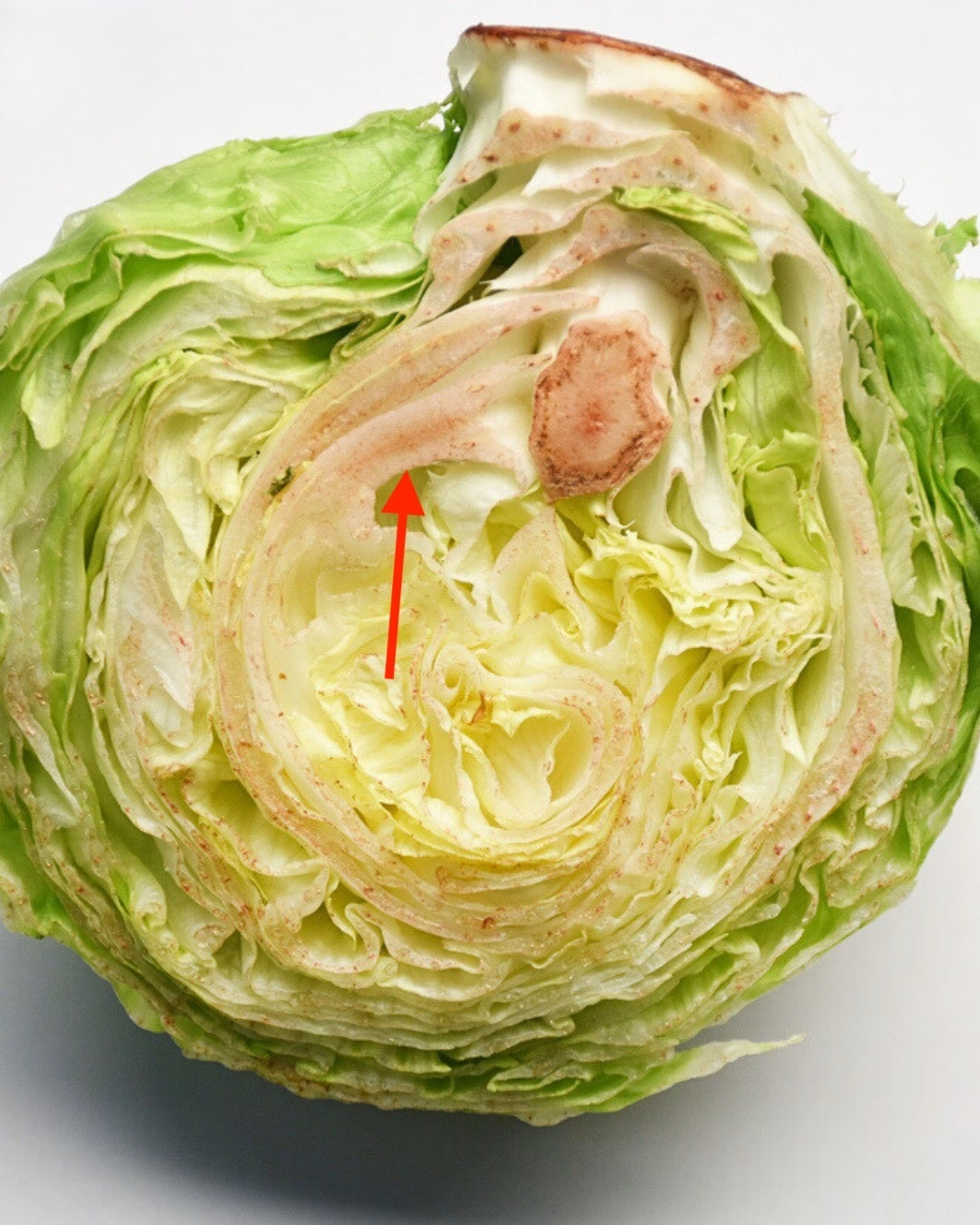
The Great Green Mystery: Unraveling Why Your Lettuce Turns Pink and How to Stop It
Imagine this: You’ve just brought home a crisp, vibrant head of lettuce, brimming with the promise of fresh salads and wholesome meals. You store it carefully, perhaps even lovingly, in your refrigerator. A day or two passes, and then you open the crisper drawer, only to be met with a disheartening sight: the edges of your beautiful green leaves have transformed, not into an appealing blush, but into a discolored, somewhat unappetizing shade of pink. Why does this happen? Is it safe to eat? And more importantly, can you prevent this silent, leafy betrayal?
This common kitchen conundrum is far more intriguing than you might suspect, weaving together a fascinating tale of cellular biology, invisible enzymes, and the subtle dance of environmental factors. It’s a microscopic drama playing out right in your fridge, and understanding it isn’t just about saving your salad; it’s about unlocking a deeper appreciation for the complex life within our food. We’re about to embark on a culinary detective story, delving into the science that turns verdant green into an unexpected, unwelcome rose. But here’s where it gets truly interesting: the secret to vibrant, long-lasting lettuce isn’t a complex scientific formula, but a series of simple, actionable steps that anyone can master. Prepare to transform your produce game forever.
The Core Mystery Unveiled: What is “Pink Lettuce”?
Before we dive into the microscopic world, let’s clearly define the phenomenon. “Pink lettuce,” sometimes referred to as “rusting” or “browning” in its later stages, is a biochemical reaction that affects the cut edges and damaged areas of lettuce leaves. It typically starts as a subtle, pale pink or reddish discoloration and can deepen over time to a rusty brown. This isn’t a sign of spoilage in the traditional sense, like mold or bacterial decay, but rather a visual cue that a significant chemical transformation has occurred. It often catches us off guard because the rest of the leaf might still appear perfectly healthy, leading to confusion and, often, unnecessary food waste. But what unseen forces are at play to instigate such a change?
This visual anomaly is an indicator that your lettuce, even after being harvested, is still a living, breathing entity, albeit one undergoing a natural, albeit accelerated, aging process. It’s not a sign of contamination or something inherently “wrong” with the lettuce, but rather a visible manifestation of its inherent biological defenses and metabolic pathways reacting to its new, post-harvest environment. The discoloration is merely the tip of the iceberg, hinting at a deeper, more intricate cellular process that has been triggered. Understanding this fundamental truth is the first step in combating the pink menace, and it sets the stage for unraveling the surprising scientific players involved.
Behind the Veil: The Unseen Culinary Chemistry at Play
At its heart, the pinking of lettuce is a classic case of enzymatic browning, a reaction you’ve likely witnessed in other fruits and vegetables like apples, bananas, or potatoes when they are cut and exposed to air. While the exact compounds and enzymes involved can vary slightly between produce types, the fundamental principle remains the same: a protective biochemical system, normally dormant within the plant’s intact cells, is unleashed when those cells are ruptured. This system, designed to protect the plant from pathogens and pests in the wild, ironically becomes the very thing that degrades its aesthetic appeal on your cutting board. It’s a fascinating paradox of nature.
ADVERTISEMENT
The key players in this leafy drama are specific organic compounds called phenolic compounds (or simply “phenols”) and a group of enzymes known as polyphenol oxidases, or PPO for short. Think of the phenols as colorless chemical precursors, patiently waiting within the lettuce’s cellular compartments. The PPO enzymes, on the other hand, are the eager catalysts, contained in separate compartments. As long as the lettuce leaf is whole and healthy, these two components remain segregated, ensuring the lettuce retains its vibrant green hue. But introduce a disruption, and the careful cellular architecture collapses, leading to a cascade of reactions that fundamentally alters the lettuce’s appearance.
The Prime Suspect: Polyphenol Oxidase (PPO) and Its Nefarious Role
Polyphenol oxidase (PPO) is the undeniable antagonist in our pink lettuce saga. This enzyme, found naturally in many plants, including lettuce, acts as a biological accelerator. Its primary role in nature is defensive: when a plant is damaged – perhaps by an insect bite or a physical tear – the PPO comes into contact with the phenolic compounds stored in the plant’s vacuoles (internal storage sacs). With the assistance of oxygen from the air, PPO oxidizes these colorless phenolic compounds into pigmented quinones. These quinones then quickly polymerize, forming larger, dark-colored compounds that manifest as the pink, red, or brown discoloration we observe. It’s the plant’s very own wound-healing mechanism, albeit one that causes a cosmetic issue for us.
This reaction is incredibly efficient and rapid, especially under optimal conditions for the enzyme. The more PPO activity, the faster and more intense the discoloration. Understanding PPO’s role is crucial because it immediately points us towards two main strategies for prevention: either limit the enzyme’s activity or prevent its interaction with oxygen and the phenolic compounds. This microscopic biological process is what dictates the shelf-life of your salad, and recognizing its power empowers you to take control. But PPO isn’t the only factor pulling the strings; several environmental conditions act as silent accomplices, accelerating this enzymatic transformation and diminishing your lettuce’s longevity.
Beyond the Enzyme: The Environmental Conspirators
While PPO is the main chemical trigger, its activity is heavily influenced by a range of environmental factors. These factors don’t just enable the reaction; they significantly accelerate it, turning a slow blush into a rapid rust. Think of them as the perfect storm elements that, when combined, create the ideal conditions for lettuce pinking. From the moment lettuce is harvested, it begins a race against time, and these environmental conspirators are constantly pushing it towards the finish line of discoloration. Learning to control them is paramount to preserving freshness. Let’s peel back the layers and uncover these hidden influences that quietly conspire against your greens.
ADVERTISEMENT
The Impact of Light: A Hidden Accelerator
You might think light is only good for plant growth, but after harvest, its role changes dramatically. Exposure to light, particularly intense or prolonged light, can significantly accelerate the pinking process in lettuce. Light provides energy that can promote oxidative reactions, including those catalyzed by PPO. It essentially acts as a low-level stressor, prompting the plant’s residual metabolic machinery to work overtime, hastening the breakdown of cells and the exposure of PPO to its substrates. This is why lettuce left out on a counter or under bright supermarket lights will often succumb to discoloration much faster than its refrigerated counterparts. It’s a silent, constant assault on the cellular integrity.
The type of light also plays a role; UV light and certain wavelengths of visible light are more problematic than others. While you might not be storing your lettuce under a sunlamp, even ambient kitchen light can contribute over time. This insight offers a simple yet powerful tip: always store your lettuce in opaque containers or in the darker sections of your refrigerator. Protecting it from light isn’t just about preventing wilting; it’s a critical defense against the insidious march of enzymatic browning. This seemingly minor detail can make a monumental difference in extending the vibrancy of your greens, keeping them picture-perfect for longer.
Temperature’s Tyranny: Why Your Fridge Matters More Than You Think
Temperature is perhaps the most critical environmental factor influencing the rate of lettuce pinking. PPO, like most enzymes, has an optimal temperature range at which it functions most efficiently. For lettuce PPO, this range is typically above refrigeration temperatures. As the temperature rises, the enzyme’s activity increases exponentially, leading to faster oxidation of phenolic compounds. Conversely, lower temperatures significantly slow down enzymatic reactions. This is why refrigeration is your first and best line of defense against lettuce discoloration. But simply putting it in the fridge isn’t enough; the *right* temperature is paramount.
The ideal storage temperature for most lettuce varieties is just above freezing, around 32-36°F (0-2°C). Temperatures much higher than this, even within the general “refrigerated” range of 40°F (4°C), can still allow PPO to remain active enough to cause significant pinking over a few days. Moreover, fluctuating temperatures, such as those experienced when lettuce is repeatedly removed from and returned to the fridge, can also stress the plant tissue and accelerate the process. Mastering temperature control is not just about convenience; it’s a precision science that dramatically impacts the longevity and quality of your delicate greens. Neglect this detail, and you’ll find yourself wrestling with pink edges far sooner than anticipated.
The Damage Dilemma: Every Cut is a Catalyst
This is perhaps the most direct and impactful trigger for pinking. Any physical damage to lettuce leaves – whether it’s from cutting, tearing, bruising, or even just rough handling – ruptures the cell walls. As we discussed, this cellular breach is the moment PPO and phenolic compounds finally meet. The more cells that are damaged, the more widespread the contact, and thus, the more extensive the pinking. Think of it like this: an intact leaf is a fortress, with its chemical components safely locked away. A cut is a breach in the walls, allowing the enemy (oxygen) to enter and the internal forces (PPO and phenols) to mix and react. This is why pre-cut bagged lettuce often turns pink much faster than a whole head of lettuce; it has already undergone significant damage.
ADVERTISEMENT
The type of cut also matters significantly. A sharp, clean cut minimizes cellular damage, creating a neat separation that seals relatively quickly. A dull knife, on the other hand, tears and crushes the cell walls, causing extensive damage and exposing a much larger surface area for oxidation. This often overlooked detail is one of the most powerful insights you can apply to prevent pinking. Simply changing how you prepare your lettuce can dramatically extend its crisp, green life. The quality of your cut is a direct determinant of how long your lettuce will stay visually appealing, making precise preparation a critical step in preservation. But there’s another invisible assailant at play, one that surrounds your lettuce constantly.
Atmospheric Alchemy: Oxygen, CO2, and the Air You Breathe
Oxygen is an essential reactant in the PPO-catalyzed browning reaction. Without oxygen, the phenolic compounds cannot be oxidized into the pigmented quinones. Therefore, limiting oxygen exposure is a primary strategy for preventing pinking. This is why vacuum-sealing or storing lettuce in modified atmosphere packaging (MAP), often used commercially, can significantly extend its shelf life. Even at home, reducing the amount of air around your lettuce by tightly wrapping it or using an airtight container can make a considerable difference. It’s about suffocating the reaction before it even begins, cutting off its vital oxygen supply.
Interestingly, carbon dioxide (CO2) also plays a subtle but significant role. Higher levels of CO2 in the storage environment, combined with low oxygen, can help inhibit PPO activity. Some commercial packaging leverages this by creating an atmosphere rich in CO2 and low in O2. However, too much CO2 can also lead to off-flavors and other physiological disorders in lettuce, so it’s a delicate balance. For the home user, simply minimizing oxygen exposure is the most practical and effective approach. Understanding the atmospheric dance of gases around your lettuce gives you another powerful tool in your freshness arsenal, an invisible shield against deterioration. But what about the very element lettuce needs to thrive: water?
Water’s Influence: Friend or Foe?
Water is crucial for lettuce’s vitality, yet its role in pinking is complex. Excess surface moisture can create a breeding ground for bacteria, leading to slimy spoilage, which is distinct from pinking but often occurs concurrently. However, insufficient moisture can lead to wilting, which stresses the plant cells and can also accelerate discoloration. The ideal scenario is lettuce that is hydrated internally but relatively dry on the surface. Washing lettuce thoroughly after purchase is good for hygiene, but ensuring it is properly dried before storage is critical for preventing both bacterial growth and accelerating enzymatic browning. A damp environment fosters an environment for reactions to happen faster.
ADVERTISEMENT
Think of it as a delicate balance: the lettuce needs internal moisture to stay crisp and prevent cellular collapse, but external moisture invites trouble. Storing wet lettuce often seals its fate for rapid deterioration. This is why the advice to wash *just before* use, or to rigorously dry lettuce after washing, is so pervasive and important. It’s not just about avoiding a soggy salad; it’s about minimizing the conditions that empower PPO and other spoilage agents. The seemingly simple act of drying your greens could be the single most impactful step in maintaining their pristine condition. With all these factors understood, a crucial question arises for many home cooks: is pink lettuce still edible?
Is Pink Lettuce Safe to Eat? Debunking the Myths
This is a question that plagues many kitchens and often leads to perfectly good lettuce being discarded prematurely. The good news is: in most cases, lettuce that has merely turned pink or rusty brown due to enzymatic browning is perfectly safe to eat. The discoloration is a purely aesthetic change, not a sign of harmful bacteria or spoilage that would make you sick. The chemical compounds formed during the oxidation process are generally benign and do not pose a health risk. It might not look as appealing, and its texture might be slightly softer, but it won’t cause food poisoning. This understanding alone can dramatically reduce food waste in your home.
However, it’s crucial to distinguish between pinking and genuine spoilage. If your lettuce is slimy, has an off-odor, or shows signs of mold, then it absolutely should be discarded, regardless of its color. These are clear indicators of bacterial or fungal contamination that *can* make you sick. Pinking, on the other hand, is a natural, non-harmful reaction. So, if your lettuce is just a bit pink on the edges but otherwise firm and fresh-smelling, feel confident in consuming it. Don’t let a superficial color change trick you into throwing away perfectly good food. Knowing this distinction is empowering, offering peace of mind and saving money. But does this color change impact its nutritional value?
Nutritional Nosedive? What Happens When Lettuce Turns Pink
While pink lettuce is safe to eat, it’s fair to wonder if the chemical changes that cause the discoloration also diminish its nutritional content. The short answer is: yes, there can be a slight reduction, but it’s often not significant enough to warrant discarding the lettuce solely for this reason. The oxidation process primarily affects the phenolic compounds themselves, which are often beneficial antioxidants. As these compounds are oxidized, their antioxidant capacity may decrease. Additionally, some vitamins, particularly vitamin C, which is also an antioxidant, can be sensitive to oxidation and light, so there might be a minor loss over time.
ADVERTISEMENT
However, lettuce provides a wide array of nutrients beyond just phenolic compounds and Vitamin C, including other vitamins (like K and A), minerals, and fiber. The core nutritional profile largely remains intact. The primary concern is typically the aesthetic appeal and texture degradation, which can make the lettuce less enjoyable to eat. So, while you might lose a fraction of its antioxidant power, the bulk of its nutritional benefits are still present. This means that if you’re aiming for optimal nutritional intake, preventing pinking through proper storage is ideal, but if it does occur, you’re not eating “empty” food. It simply highlights the importance of consuming fresh produce promptly and storing it correctly to maximize its health benefits. This leads us to the next vital discussion: how the commercial world battles this very issue, and what we can learn from them.
The Farmer’s Fight: Battling the Pink Menace from Field to Fork
For commercial growers and distributors, preventing lettuce pinking is not just an aesthetic concern; it’s a massive economic one. Discolored lettuce means rejection by retailers, reduced shelf life, and increased food waste, directly impacting profits. Consequently, significant research and innovation have gone into understanding and mitigating this phenomenon throughout the entire supply chain, from the moment lettuce is harvested in the field to its arrival on supermarket shelves. Farmers employ sophisticated techniques to ensure the produce you buy is as pristine as possible, and these methods offer valuable insights for home use. Their strategies are a masterclass in post-harvest preservation.
This fight begins even before harvest, with the selection of lettuce varieties that are naturally more resistant to pinking. Certain cultivars, bred for their robust cell structure or lower PPO activity, are preferred for commercial production. Once harvested, rapid cooling (hydro-cooling or forced-air cooling) is immediately employed to bring the core temperature of the lettuce down as quickly as possible, thereby dramatically slowing PPO activity. Specialized modified atmosphere packaging (MAP) is also widely used, creating a controlled environment around the lettuce with reduced oxygen levels and sometimes elevated CO2, further inhibiting enzymatic browning. This meticulous attention to detail ensures that by the time lettuce reaches your grocery store, it has already endured a gauntlet of preservation techniques designed to keep it gloriously green. But what about the final frontier – your kitchen?
Consumer’s Command: Practical Strategies to Preserve Your Greens
Now that we’ve delved into the science and commercial practices, it’s time to bring that knowledge into your own kitchen. You might not have industrial hydro-coolers or sophisticated MAP technology, but you have powerful tools at your disposal: awareness and simple techniques. By understanding the factors that cause pinking, you can directly counteract them, extending the life of your lettuce and ensuring every salad is a vibrant masterpiece. These aren’t just tips; they’re actionable commands that empower you to take control of your produce’s destiny. Get ready to transform your lettuce from a fleeting pleasure into a long-lasting joy. The journey to perfectly preserved greens starts here, with crucial steps you can implement today.
ADVERTISEMENT
The Art of the Cut: Minimizing Damage, Maximizing Freshness
We’ve established that physical damage is a primary trigger for pinking. Therefore, the way you prepare your lettuce is paramount. Always use a very sharp knife to cut lettuce. A sharp blade severs cell walls cleanly, minimizing the release of PPO and phenolic compounds and limiting the surface area for oxidation. A dull knife, by contrast, crushes and tears the cells, causing extensive damage and almost guaranteeing rapid pinking. This seemingly small detail is incredibly impactful. Think of your knife as a surgeon’s scalpel, making precise incisions rather than blunt force trauma.
For varieties like iceberg or romaine, consider tearing the leaves instead of cutting them, especially if you’re not using them immediately. Tearing, while still causing some cellular damage, often results in a rougher, less uniform break that some believe exposes less surface area for concentrated enzymatic activity compared to a clean, straight cut. While this is a subject of debate among culinary professionals, the key takeaway is to be gentle and efficient with your preparation. Minimize the time between cutting and consumption, and always ensure your tools are in top condition. This small shift in technique can lead to noticeably longer-lasting freshness, preventing disappointment before it even begins.
The Acidic Shield: Simple Kitchen Hacks to Prevent Pinkness
Acids, like lemon juice or vinegar, are known inhibitors of PPO activity. If you’ve ever soaked cut apples in lemon water to prevent browning, you’ve witnessed this principle in action. For lettuce, a very dilute acid bath can offer a similar protective effect, especially for pre-cut greens you intend to store for a short period before use. A quick rinse in a bowl of cold water with a splash of lemon juice or white vinegar (about a tablespoon per quart of water) can help to lower the pH on the surface of the lettuce, creating an unfavorable environment for the PPO enzyme to function. However, this is a delicate balance.
Too much acid can alter the taste and texture of the lettuce, making it unpalatable. The key is subtlety. This method is best employed immediately after cutting or washing, followed by thorough drying. While it might add an extra step to your routine, this acidic shield provides an additional layer of protection against the relentless march of oxidation. It’s a professional trick that’s easily adapted for the home kitchen, offering an extra day or two of pristine green. But the most significant impact on your lettuce’s longevity will come from mastering its storage environment.
ADVERTISEMENT
The Cold Truth: Optimizing Your Refrigerator for Lettuce Longevity
As we’ve learned, temperature is paramount. Your refrigerator’s crisper drawer is designed to provide a high-humidity, low-temperature environment, which is ideal for lettuce. However, not all crisper drawers are created equal, and not all refrigerators maintain a consistent temperature throughout. Aim for the coldest part of your fridge, typically the back, but avoid areas where the lettuce might freeze. A temperature between 32-36°F (0-2°C) is ideal for slowing down PPO activity and overall respiration, significantly extending the life of your greens. This level of precise cold ensures the lettuce remains dormant, not rapidly decaying.
Beyond temperature, managing humidity is crucial. Lettuce needs humidity to prevent wilting, but not so much that it becomes a breeding ground for bacteria. The crisper drawer is usually equipped with a humidity slide; for lettuce, set it to “high humidity” or “vegetables.” This helps to retain the moisture within the leaves without allowing condensation to build up excessively on the surface, which could lead to sliminess. Understanding these nuances of your refrigerator’s capabilities allows you to turn a simple appliance into a sophisticated preservation chamber, maximizing every precious leaf. But there are even deeper secrets to unlock for truly extended freshness.
Beyond the Basics: Advanced Storage Secrets for Pro-Level Freshness
For those truly dedicated to maximizing lettuce freshness, there are a few advanced techniques that go beyond the standard crisper drawer. One highly effective method involves wrapping your lettuce in paper towels before placing it in an airtight container or a sealed plastic bag. The paper towels absorb any excess moisture from the lettuce surface, preventing sliminess and bacterial growth, while the sealed environment helps to maintain humidity and reduce oxygen exposure. This creates a micro-climate that is ideal for long-term preservation, balancing moisture and air control perfectly. It’s a simple trick with profound results, transforming a quick wilt into days of crispness.
Another insider tip for whole heads of lettuce is to store them upside down in the crisper drawer. This allows any residual water to drain away from the core, preventing rot and extending freshness. For pre-washed and bagged lettuce, consider transferring it to a hard-sided container lined with paper towels; the hard container prevents bruising, and the paper towels manage moisture. These small, often overlooked, adjustments to your storage routine can significantly impact the lifespan of your lettuce, keeping it vibrant and appetizing for much longer than you thought possible. It’s about optimizing every variable within your control, turning your kitchen into a hub of freshness.
ADVERTISEMENT
Washing Wisely: The Delicate Balance of Cleanliness and Preservation
The debate over when to wash lettuce is ongoing, but for optimal freshness and to prevent pinking, a strategic approach is best. Washing lettuce immediately upon bringing it home is tempting for hygiene, but if not dried meticulously, it can accelerate spoilage. Excess moisture on the surface of the leaves creates a perfect environment for bacterial growth and can also encourage the enzymatic reactions that lead to pinking. This dampness, combined with residual heat from transport, is a recipe for disaster.
The most effective strategy is to wash lettuce *just before* you intend to use it. If you absolutely must wash it ahead of time, invest in a good salad spinner. A thorough spin will remove the vast majority of surface water, making it safe for storage. After spinning, you can also gently pat the leaves dry with a clean kitchen towel or more paper towels before storing them as described above. Remember, the goal is internal hydration but external dryness. This delicate balance of cleanliness and dryness is crucial for avoiding both sliminess and the dreaded pink discoloration, ensuring your lettuce remains a joy, not a chore.
Variety Matters: Choosing the Right Lettuce for Lasting Greenery
While all lettuce varieties are susceptible to pinking to some degree, some are more resilient than others. Heartier varieties like romaine, iceberg, and endive tend to hold up better than more delicate types like butter lettuce or loose-leaf varieties. This is partly due to their thicker cell walls and sometimes lower concentrations of PPO or phenolic compounds. If you find yourself consistently battling pinking, consider experimenting with more robust lettuce types that naturally resist spoilage for longer periods. This isn’t a silver bullet, but it offers another layer of defense.
When selecting lettuce at the grocery store, always choose heads that look crisp, vibrant, and free from any discoloration or damage. A healthy, well-hydrated head of lettuce from the outset has a much better chance of resisting pinking and staying fresh for longer in your home. Avoid any lettuce that already shows signs of wilting, browning, or sliminess, as its deterioration process has already begun. By making smart choices at the point of purchase, you’re setting yourself up for success, ensuring that your greens are already prepped for a longer, more vibrant life in your kitchen. This proactive selection process is the first, often overlooked, step in long-term freshness.
ADVERTISEMENT
The Future of Fresh: Innovations in Preventing Pinking
The fight against food waste and the pursuit of optimal freshness continue to drive innovation in the agricultural and food science sectors. Researchers are constantly exploring new methods to extend the shelf life of produce, including lettuce, and to combat enzymatic browning more effectively. These advancements promise even longer-lasting, pristine greens for consumers worldwide. Imagine a future where pink lettuce is a relic of the past, consigned to the annals of culinary history. This vision isn’t as far-fetched as it seems, with exciting developments on the horizon.
New lettuce varieties are continuously being developed through selective breeding, focusing on traits that confer resistance to pinking, such as altered PPO activity or different phenolic compound profiles. Beyond genetic improvements, post-harvest technologies are also evolving. Edible coatings, often made from natural plant polymers, are being explored to create a protective barrier on the lettuce leaves, reducing oxygen exposure and slowing down enzymatic reactions. Innovative packaging solutions, utilizing advanced modified atmospheres or even active compounds that scavenge oxygen, are also on the horizon. The future of fresh lettuce looks incredibly bright, driven by scientific breakthroughs aimed at delivering peak quality and minimizing waste. Until then, however, your kitchen remains the most crucial battleground.
Unlocking the Secret Garden: Your Path to Perfectly Pristine Produce
The journey from a vibrant green head of lettuce to a disappointing pink relic is a fascinating dance of enzymes, oxygen, and environmental factors. But as we’ve explored, this process is far from a mystery now. You hold the knowledge and the power to significantly influence this transformation, ensuring your salads remain crisp, green, and appealing for days longer than before. From the moment you select your lettuce at the store to the way you prepare and store it in your kitchen, every decision you make impacts its longevity and quality. This isn’t just about preventing a color change; it’s about respecting your food, reducing waste, and enjoying the freshest possible ingredients.
By implementing the strategies we’ve discussed – sharp cutting, proper drying, optimal cold storage, light protection, and perhaps even a subtle acidic rinse – you become the guardian of your greens. You’re not just preventing pinking; you’re actively engaging in a sustainable practice that saves money and enhances your culinary experience. The secrets to pristine produce are no longer hidden; they are now firmly in your hands. So go forth, armed with this newfound understanding, and conquer the pink menace once and for all. Your salads, and your wallet, will thank you. Now, imagine the possibilities of applying this same scientific curiosity to every ingredient in your kitchen. What other culinary mysteries await your discovery?
ADVERTISEMENT
